
Reclaiming the Gaze: How Private AI Tools Are Changing Who Gets to Imagine—and Control—Intimate Imagery
For decades, the power to shape how bodies are seen belonged to a few: photographers, editors, platform algorithms, studio executives. The rest of us were subjects—posed, filtered, cropped, and approved.
But something subtle has shifted in recent years. Not in public feeds or viral trends, but in private browser tabs, late at night, in incognito mode. People are no longer just consuming images. They’re reimagining them—on their own terms, for their own reasons, with tools that put creative control back in their hands.
This isn’t about mass production or viral content. It’s about personal agency: the ability to explore, experiment, or create without asking permission, without leaving a trace, and without conforming to someone else’s standard.
And while this movement spans art, fashion, and identity, it’s found a quiet home in spaces where the body is both subject and canvas—like adult content creation.
Here, the question isn’t “Can AI do this?”
It’s “Who gets to decide how it’s used?”
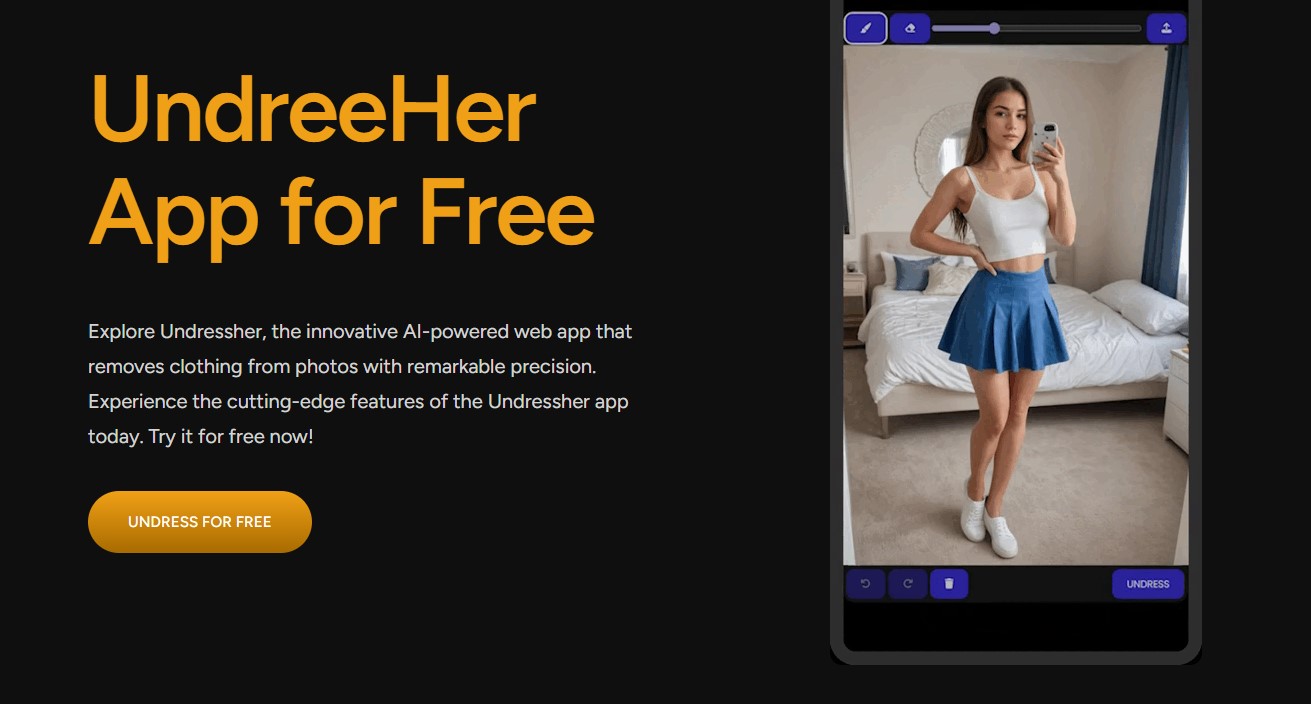
The Rise of the Private Studio
Gone are the days when generating a custom visual required expensive software, technical skills, or a team of editors. Today, with a smartphone and a browser, anyone can explore a simulated reinterpretation of a clothed photo—adjusting lighting, pose, or aesthetic with a few clicks.
But what makes this different from old-school photo editing?
It’s intent.
Traditional editing alters what’s there. AI reconstruction imagines what could be—based on anatomy, physics, and context. It’s not magic. It’s inference. And when used ethically, it becomes a form of digital sketching: a way to test ideas before committing to reality.
For creators, this means faster iteration. For curious users, it means private exploration. For couples, it can mean shared fantasy—built together, not scraped from the internet.
The key? Control stays with the user.
Why Privacy Isn’t Just a Feature—It’s the Foundation
The most trusted tools in this space share one trait: they disappear after use.
No sign-up. No email. No account. Upload a photo, get your result, and the system forgets you were ever there. This isn’t a gimmick. It’s a philosophy.
Because when you’re working with intimate imagery—even simulated—you don’t want logs, cookies, or cloud backups. You want ephemerality.
That’s why the best platforms:
- Auto-delete uploads within 5–10 minutes,
- Don’t store IP addresses or device data,
- Avoid third-party trackers or analytics,
- And never upsell you based on your behavior.
This level of privacy isn’t easy to maintain. It costs more. It scales slower. But it builds trust—and in a space built on vulnerability, trust is everything.
Real Uses, Real Boundaries
Despite sensational headlines, most people aren’t using these tools to target strangers. The real use cases are far more grounded:
- Creators testing concepts safely
A model might generate a nude simulation from a bikini photo to preview how a set would look—before booking a photographer or risking a platform ban. It’s a low-stakes way to refine vision. - Personal exploration with owned imagery
Some users only work with photos of themselves, public domain archives, or AI-generated faces. They’re not trying to “expose” anyone—they’re engaging with visual archetypes, like reading fiction. - Consensual digital play between partners
With clear mutual agreement, couples sometimes use these tools to explore “what if” scenarios—sending custom-generated images as part of flirtation or intimacy. As long as both parties are enthusiastic, it’s no different than sharing a fantasy story. - Archival reinterpretation
Vintage pin-up or fashion photography often features artistic draping or sheer fabrics. Some enthusiasts use AI to generate alternate versions of these historical images—not to deceive, but to explore creative possibilities within a public domain context.
In all these cases, the boundary is clear: consent and ownership come first.
The Language of Search—and What It Reveals
People often arrive at these tools through search phrases like undressher not because they’re looking for a brand, but because they’re describing an action: “I want to see what she’d look like without clothes.”
That phrasing carries baggage. But in practice, it’s often shorthand for a deeper need: control over narrative.
For too long, intimate imagery was shaped by outsiders—directors, editors, algorithms. Now, individuals can ask: What if I controlled the gaze? What if I decided how my body—or my fantasy—was represented?
The tool doesn’t answer that question. But it gives you the brush to paint your own version.
How to Use These Tools Responsibly
If you’re curious, here’s how to stay ethical and safe:
🔹 Only use images you own or have explicit rights to—yourself, public domain, or AI-generated faces.
🔹 Never assume “public = fair game”—a social media post doesn’t grant consent for intimate reinterpretation.
🔹 Use incognito mode—prevents accidental history saves or cookie tracking.
🔹 Don’t share outputs of real people—even as a joke. Once it’s out, you lose control.
🔹 Assume nothing is truly deleted—operate as if your upload could resurface someday.
Privacy isn’t a guarantee. It’s a practice.
The Tech That Respects You
Modern tools have come a long way from the glitchy, biased outputs of the past. Today’s best services use diffusion models fine-tuned on diverse datasets, so they understand:
- How light interacts with different skin tones,
- How fabric drapes over varied body types,
- How posture changes silhouette and shadow.
Some even let you adjust parameters—body shape, lighting mood, texture—before generating. It’s not about realism. It’s about plausibility within your vision.
And because they run on cloud GPUs, you don’t need a powerful PC. Your phone is enough.
The Bigger Shift: From Consumption to Co-Creation
We’re moving away from a world where intimate imagery is something you consume—and toward one where it’s something you co-create, even if only for yourself.
This isn’t about replacing real bodies or real connection. It’s about expanding the space between imagination and expression.
And in that space, the user isn’t a passive viewer.
They’re the director, the editor, and the audience—all at once.
Final Thought
Tools like those found through searches for undressher aren’t inherently good or bad. Like cameras, mirrors, or paintbrushes, they reflect the intent behind them.
But when designed with privacy, ethics, and user agency at the core, they become something rare: a private studio where you—not an algorithm, not a platform, not a stranger—decide what gets imagined.
And in a world that’s always watching, that kind of control isn’t just useful.
It’s liberating.